POCKET GEARSPOCKET GEARS
$2,000 on paper, $1,456 in the account. Teach it before their first paycheck.
20 ready-to-print lessons, each with a game, a script you can read out loud and a worksheet. Your kid learns where money comes from, how saving works and why prices rise, at the kitchen table, 15 to 40 minutes at a time.
Instant 58 page PDF. Secure Stripe checkout. All sales are final.
First edition, checked November 2026. Prices and sources match USPS and Mint as of then.
At checkout: add the grown-up book, The Story of Money, for $27.
The comment we see most on Pocket Gears is some version of this one:
"No school teaches you about money."
Then the paycheck arrives and it's smaller than the offer. "$2,000 on paper and only $1,456 actually lands in the account." Then someone finds out the bank doesn't keep their deposit in a box. "Did anyone else assume it was just sitting there?!"
Nobody explained any of it. And right under those comments, parents keep asking the same thing: where do I start with a six-year-old?
Here. Twenty short lessons that take one gear of the money machine at a time and let your kid play with it. They swap without money, then with it. They run a bank out of a shoebox. They rain play money on a toy-car town and watch the prices jump.
You don't need to be good with money to teach this. Every lesson gives you the words to say, out loud, and a game that does the teaching.
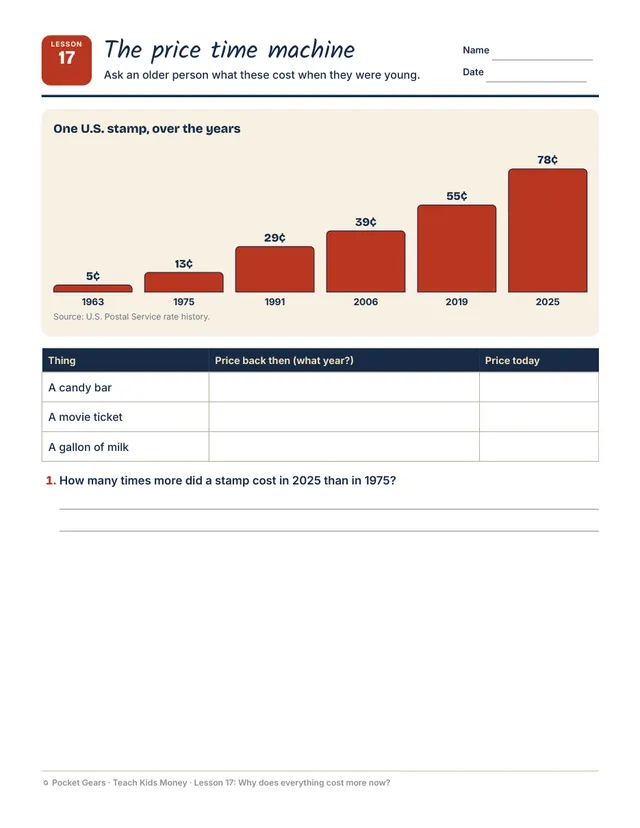
"A stamp did not cost 13 cents. Nothing costs 13 cents."
Today the same stamp is 78 cents. Six times as much.
Show your kid this chart. Ask them to guess the price in the year they were born before you tell them.
Then say it in kid words: "The stamp didn't get better. The dollar got weaker. Each year, most prices creep up a little. That's called inflation." Then the question that makes it click: if you hid $10 under your bed for 20 years, would it buy more or less?
A dollar slowly buys less. Saved money needs to grow, or it shrinks.
Source: U.S. Postal Service, "Rates for Domestic Letters Since 1863", and the July 13, 2025 rate change. In the pack, this lesson adds a game with a grandparent on the phone, a worksheet, versions for younger and older kids, and the lesson right after it shows what happens when a country prints too much money.
58 pages. Every lesson is one parent page and one kid worksheet, built the same way every time:
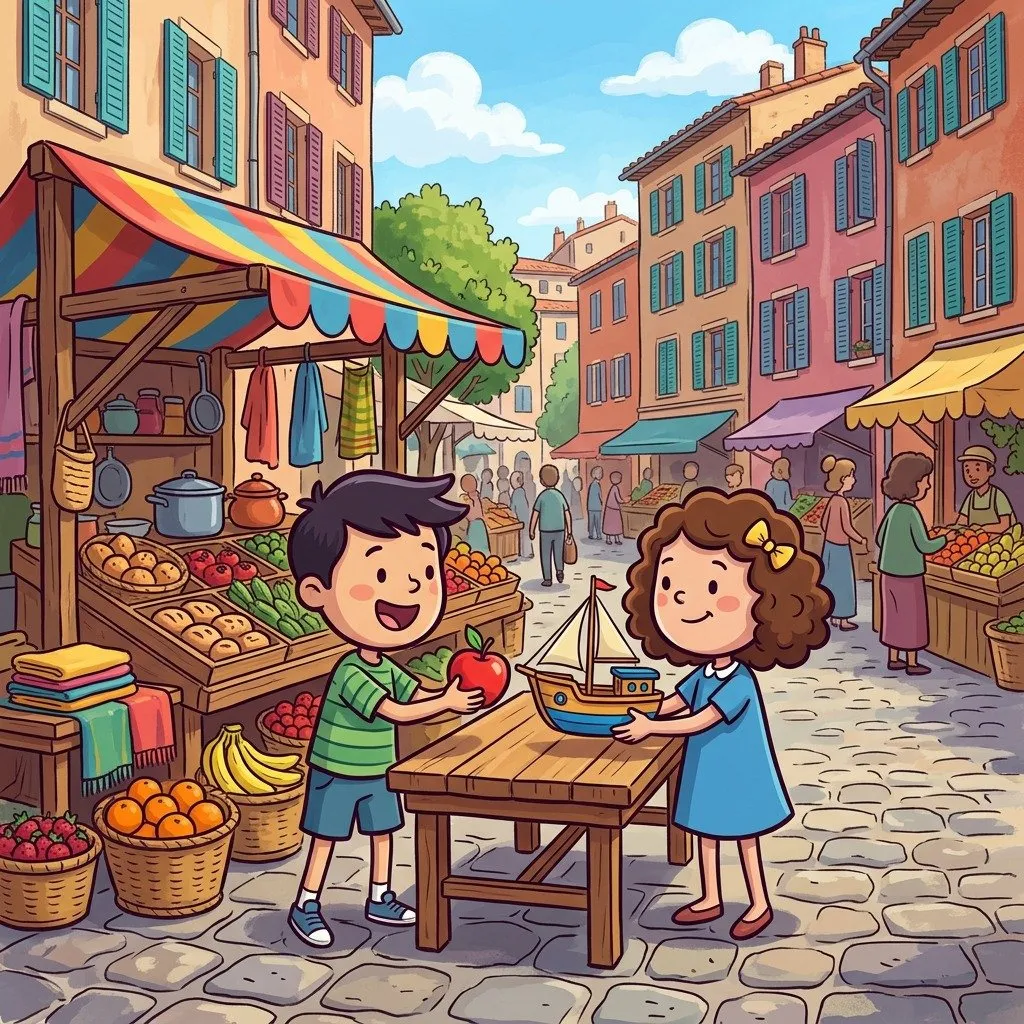
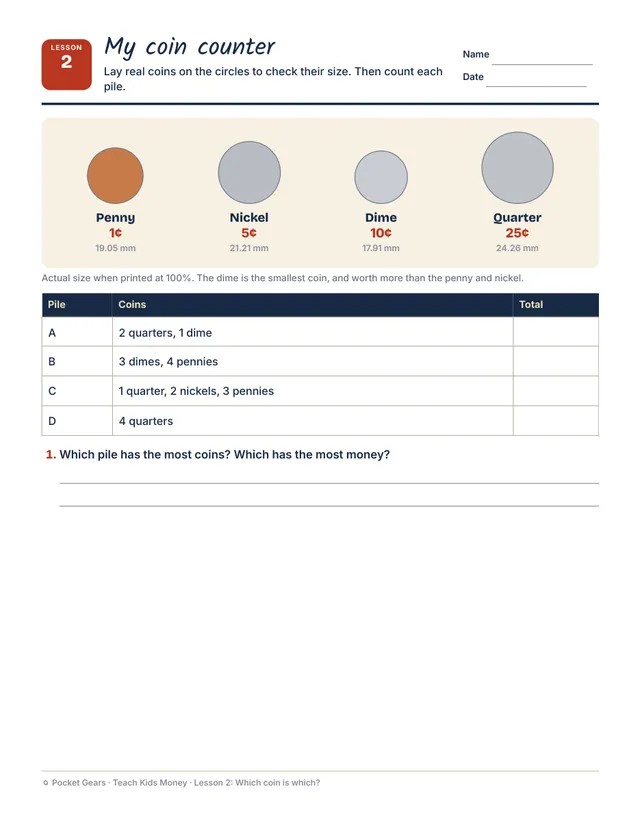
Swapping vs. money, true-size coins, earning from real jobs, needs and wants, making change, shells to cards, and who makes money.
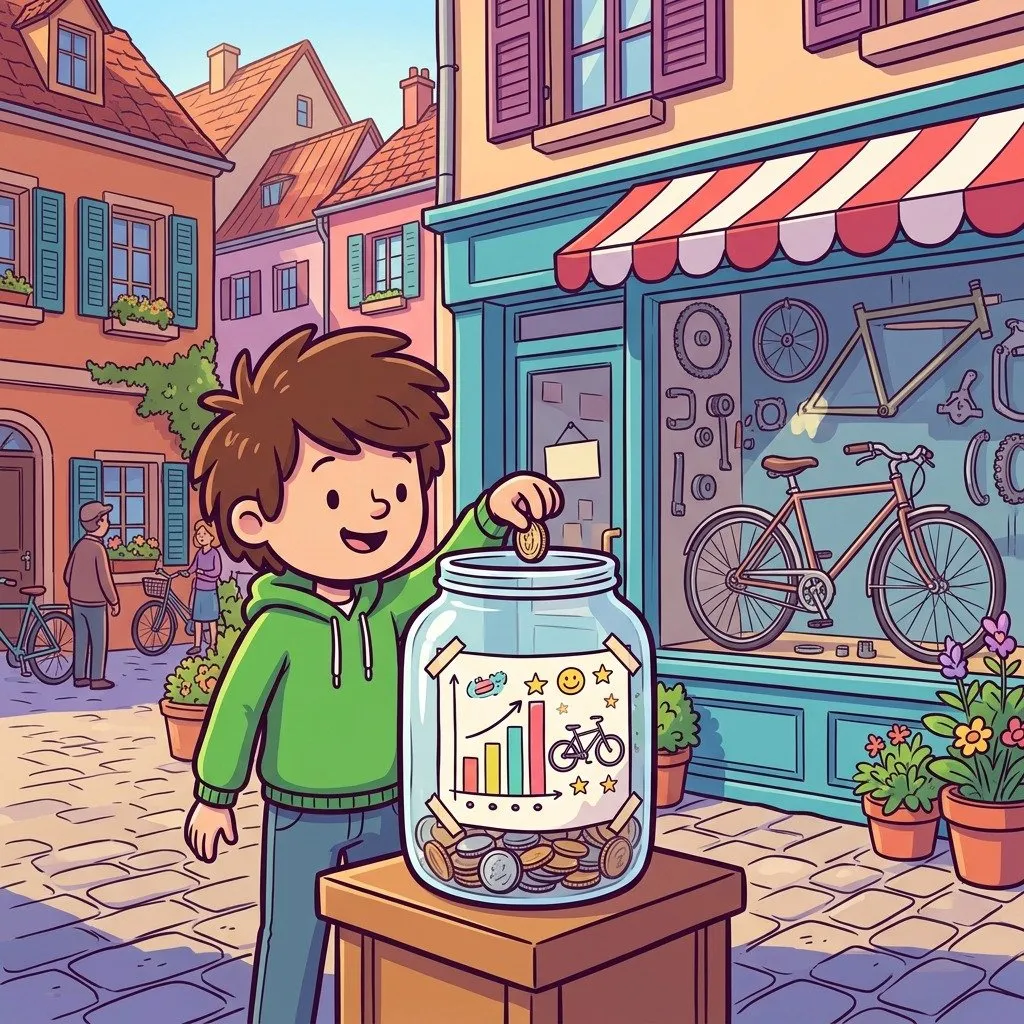
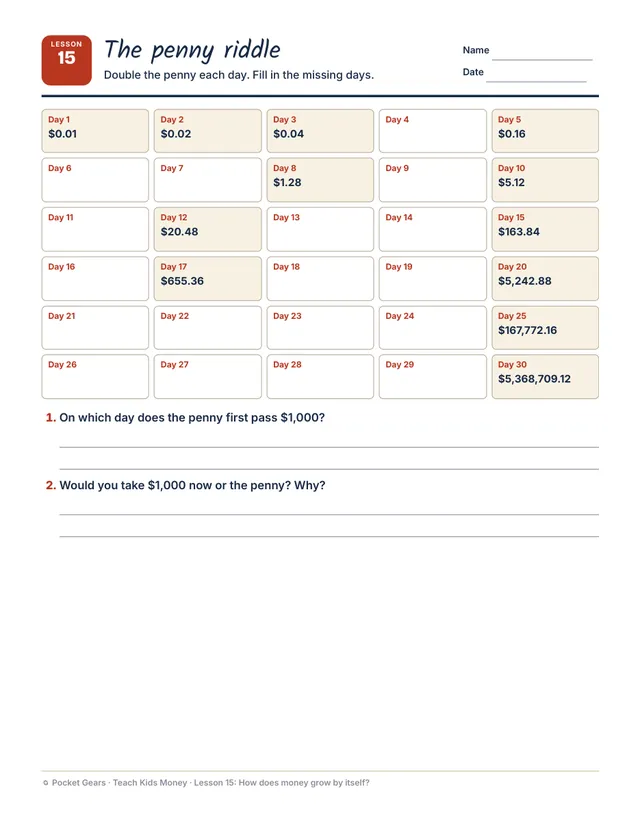
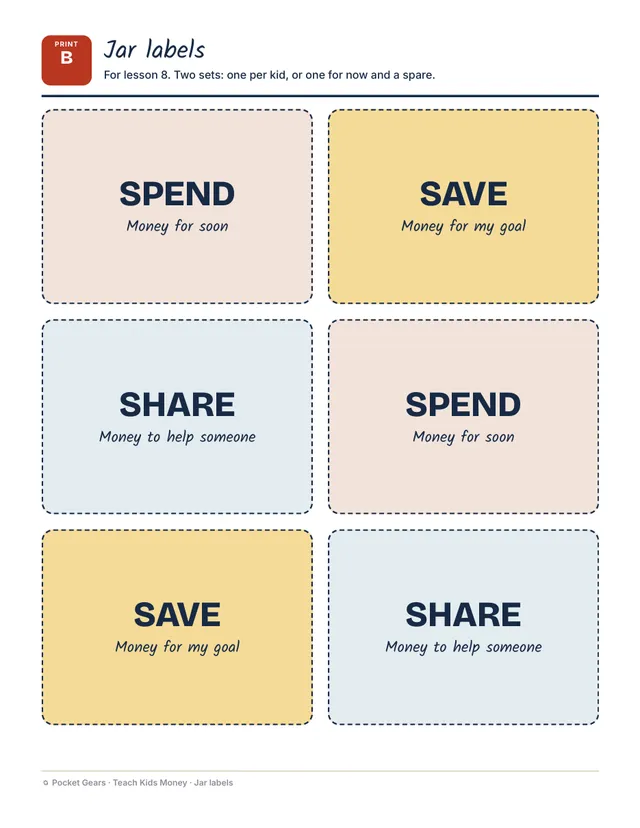
Save, spend and share jars, goal math, waiting, opportunity cost, unit prices, ad tricks, what a bank does, and the penny that doubles.
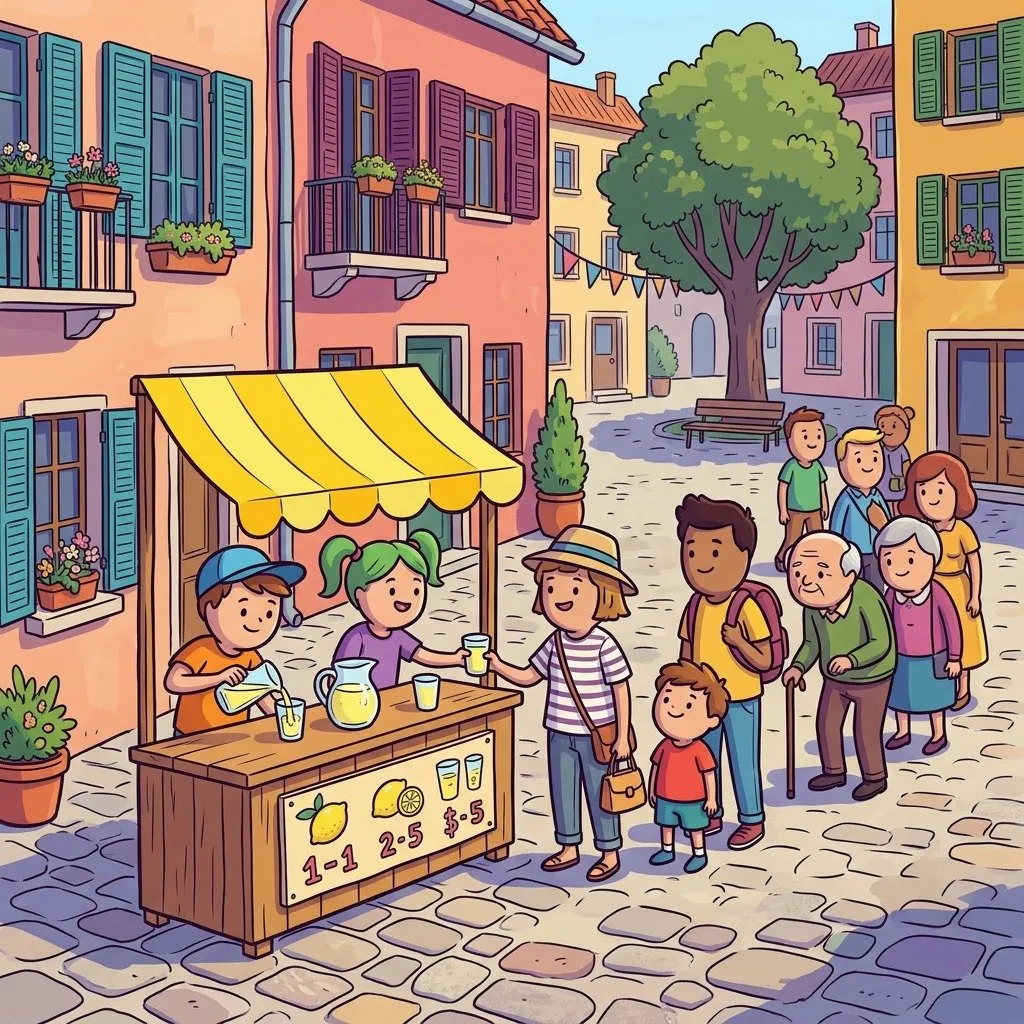
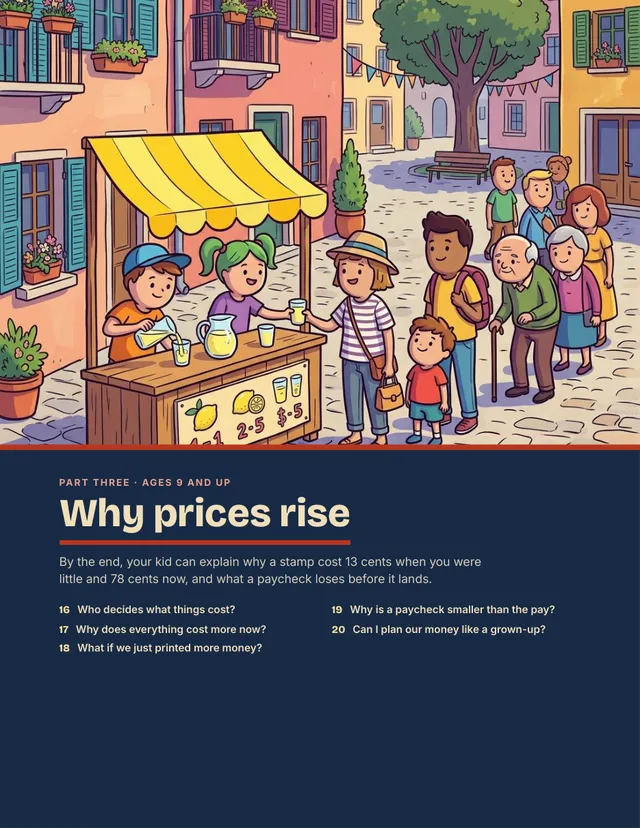
A lemonade stand on a hot and a cold day, inflation from the post office's own receipts, printing money, where a paycheck goes, and a family budget.
Play town dollars · Save, spend, share jar labels · A 50-box goal chart · A weekly job chart · Money words for the fridge · A Money Gears Master certificate · A 10-week plan · Six picture books to read together · The full answer key.
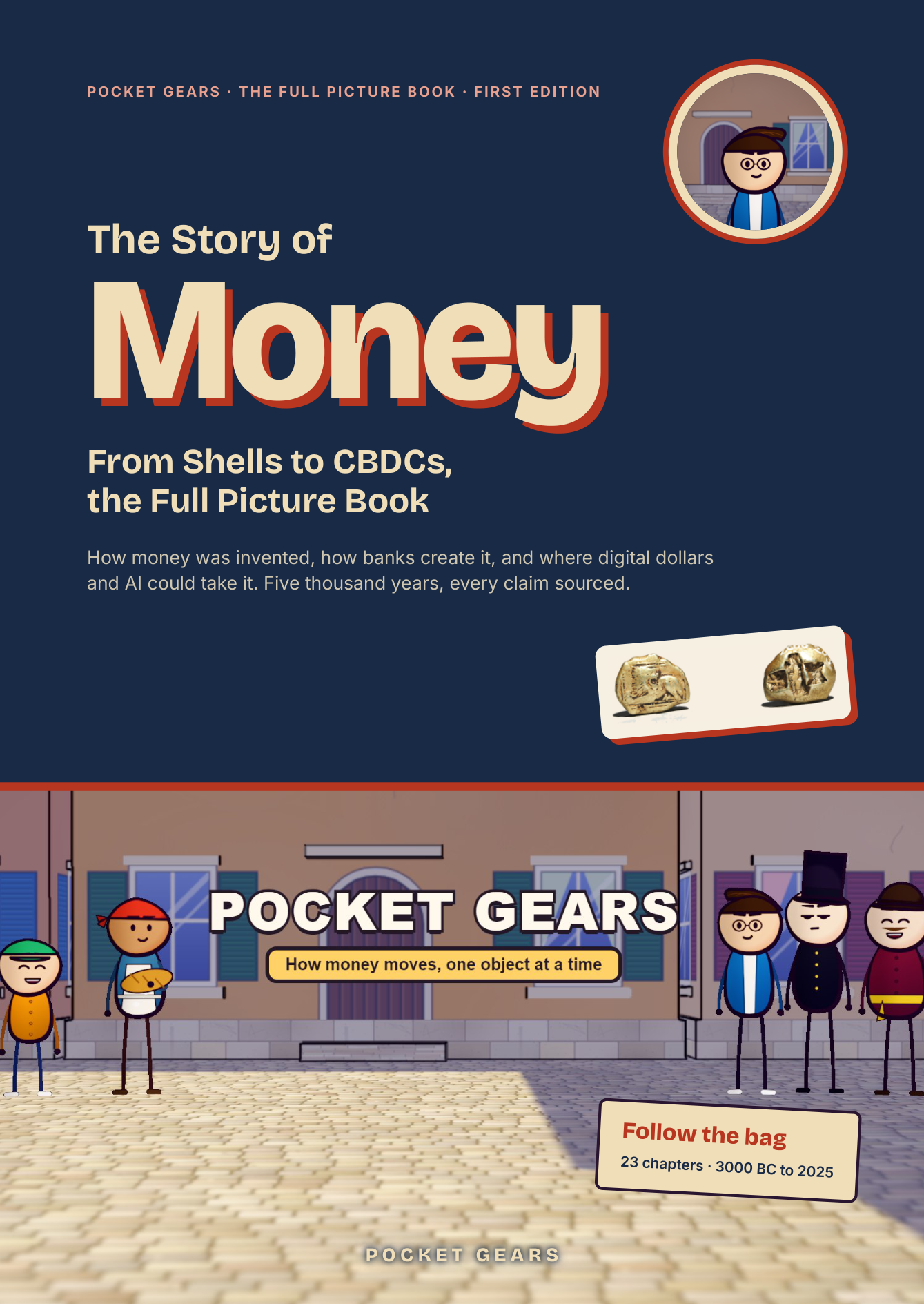
How money was invented, how banks create it and why prices rise, with every claim sourced.
See the book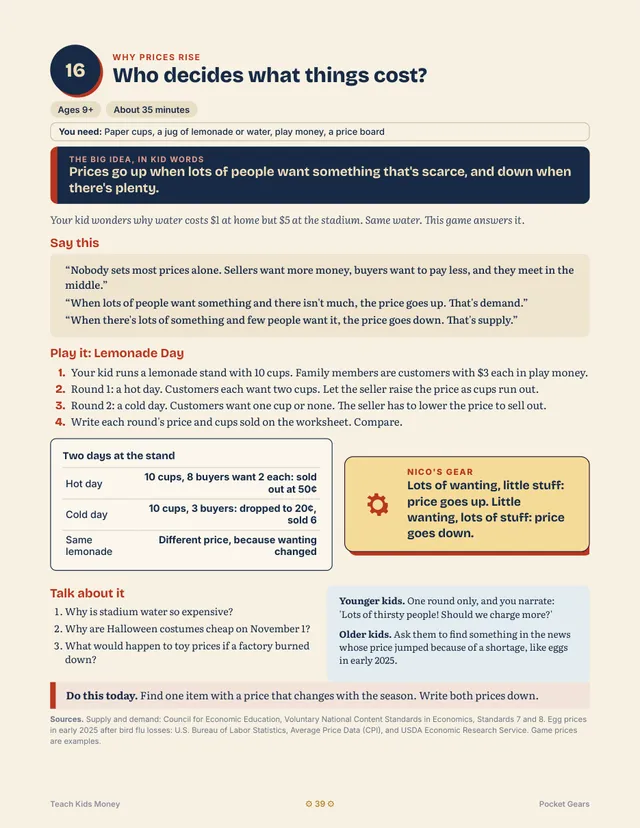
Instant 58 page PDF. Secure Stripe checkout. All sales are final.

Hey, I'm Nico. On Pocket Gears I take one money system at a time and show the gears inside, so it stops feeling like magic or a conspiracy. This pack does the same thing, sized for a kid.
Plain words, real numbers, and a source for every one of them, printed right on the lesson's page. No lectures about money being good or evil, and no promises that saving makes anyone rich. Just the machine, in pieces small enough to hold.
Education, not financial advice. Prices inside the games are examples and say so.
Part One is built for 6 and up, and every lesson has a "Younger kids" line that shrinks it down, like using only pennies and nickels. The Start here page tells you which lessons to do first at each age, and which to save for later.
Yes. That's who it's for. Each lesson gives you the exact words to say and the answers are in the back. Plenty of parents will learn a thing or two right alongside their kid, and that's fine.
Yes. The worksheets print on their own, so you can copy them for a class, and the games work in small groups. Your purchase covers copies for your own family or your own classroom.
You download the PDF right after paying. It's set up for US Letter and prints fine on A4. Print the whole pack once, then reprint just the worksheets for each kid. It reads fine on a phone or tablet too.
The coins, stamps and taxes are American. The ideas, games and most worksheets work anywhere; you'd swap in your own coins for lesson 2.
All sales are final. This is a digital download you get right away, so we don't offer refunds. This doesn't affect any rights you have by law. That's why a free lesson from the pack, the contents and six real pages are right here.
Twenty lessons, twenty worksheets, ten weeks at two lessons a week. By the end your kid can count change, save for a goal, and explain why a stamp costs 78 cents.
Instant 58 page PDF. Secure Stripe checkout. All sales are final.